iCAN: Interpersonal Skills
A character shares what Interpersonal Skills looks like at their level
Video coming soon
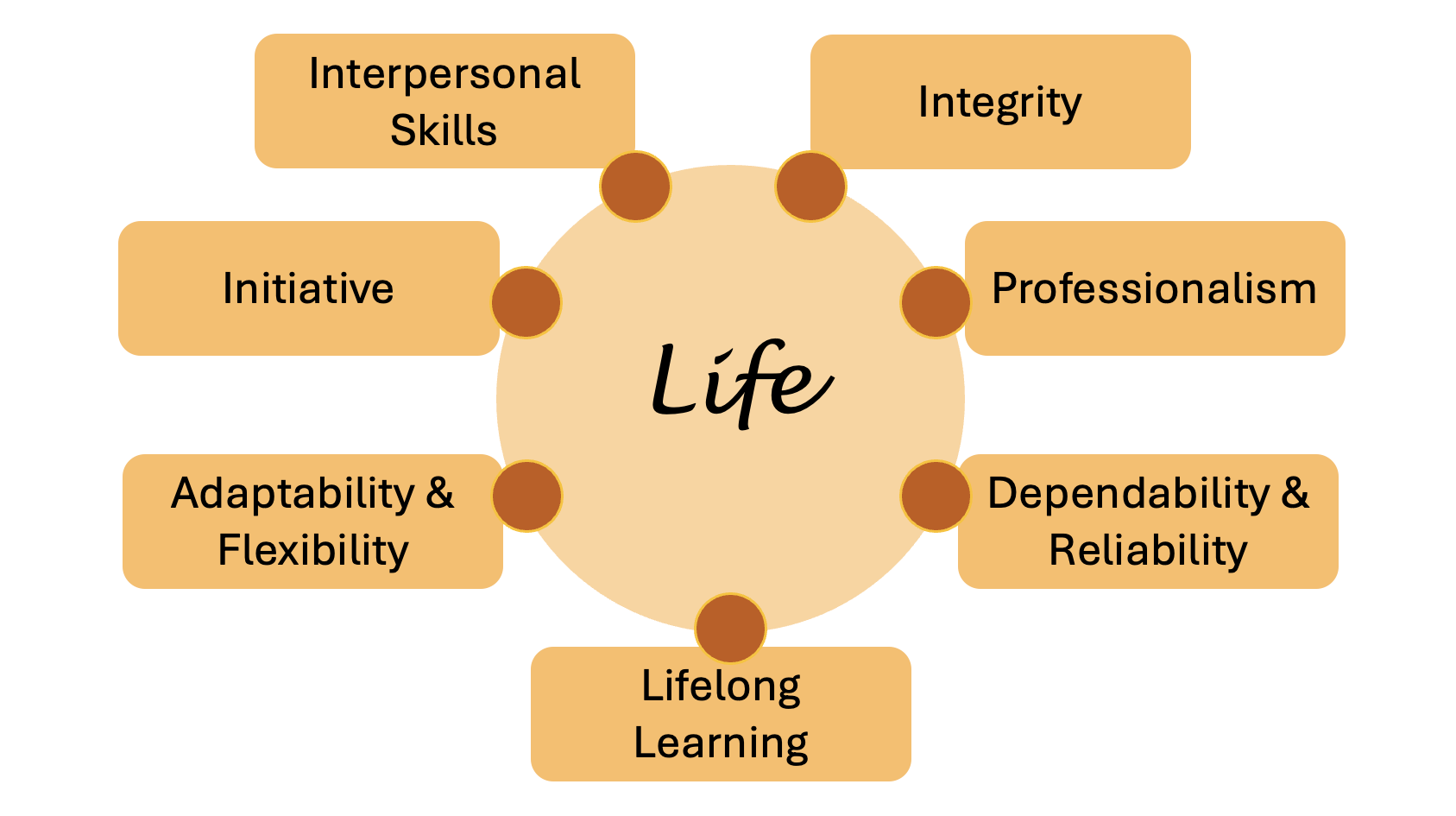
Interpersonal Skills
Building relationships that work
What is Interpersonal Skills?
Interpersonal Skills are the abilities that make working and living alongside others possible — reading social cues, managing conflict, building rapport, and communicating with empathy. These skills determine the quality of every relationship you have, professional or personal. They are learnable, practicable, and among the most valued by every employer.
Recognize It in Your Life
Think of a relationship — at work, at home, or in the community — that works really well. What makes it function?
Take a moment before you write. The best iCAN statements come from real examples.
DOK 1 · Identify
I can identify Interpersonal Skills when I…
Complete the sentence with a specific, real example from your life.
Choose a verb to start your statement:
Your name and learner ID are attached automatically
1.1 · DOK1 · Interpersonal Skills
DOK 2 · Demonstrate
I can demonstrate Interpersonal Skills when I…
Complete the sentence with a specific, real example from your life.
Choose a verb to start your statement:
This becomes evidence in your NextREADY GPS record
1.1 · DOK2 · Interpersonal Skills
(function(){ var p=new URLSearchParams(location.search); var id=p.get('learner')||''; var ref=p.get('ref')||'direct'; document.querySelectorAll('[data-learner-id]').forEach(function(el){el.value=id;}); document.querySelectorAll('[data-src]').forEach(function(el){el.value=ref;}); })();
function nrInsertVerb(level,verb,skill){ var ta=document.getElementById(level+'-input'); if(!ta)return; var txt = level==='dok1' ? 'I can identify '+skill+' when I notice myself '+verb+' ' : 'I can demonstrate '+skill+' by '+verb+' '; ta.value=txt; ta.focus(); ta.setSelectionRange(ta.value.length,ta.value.length); }
function nrSubmit(level,skillCode){ var ta=document.getElementById(level+'-input'); var text=ta?ta.value.trim():''; if(!text){alert('Please write your iCAN statement before submitting.');return;} var icanEl=document.getElementById(level+'-ican'); var icanTxt=document.getElementById(level+'-ican-text'); if(icanEl&&icanTxt){icanTxt.textContent=text;icanEl.classList.add('visible');} var postId=(typeof nrPostId!=='undefined')?nrPostId:0; var nonce=(typeof wpApiSettings!=='undefined')?wpApiSettings.nonce:''; var lid=document.querySelector('[data-learner-id]'); var src=document.querySelector('[data-src]'); var dok=level==='dok1'?'1':'2'; var body={ post:postId, content:text+'\n\n[learner_id:'+(lid?lid.value:'')+'][source:'+(src?src.value:'direct')+'][skill:'+skillCode+'][dok:'+dok+']', author_name:'NextREADY Learner', author_email:'learner@nextready.local' }; if(postId&&nonce){ fetch('/wp-json/wp/v2/comments',{ method:'POST', headers:{'Content-Type':'application/json','X-WP-Nonce':nonce}, body:JSON.stringify(body) }).then(function(r){return r.json();}).then(function(d){ if(d.id){ta.value='';ta.placeholder='✓ Submitted — thank you!';ta.disabled=true;} }).catch(function(e){console.warn(e);}); } else { ta.value='';ta.placeholder='✓ Recorded';ta.disabled=true; } }
