You already know
more than you think.
So does your family.
Learning together doesn't begin when someone signs up for a program. It begins at the kitchen table — in the questions your child asks, in the story your grandmother tells, in the skill you've been using your whole life without a name for it.
El aprendizaje juntos no comienza cuando alguien se inscribe en un programa. Comienza en la mesa de la cocina.
You are not here to support a learner.
You are a learner.
Most family learning programs position parents and grandparents as helpers — people who assist a child's learning journey. ASCEND is built differently. Every person in a family has skills that deserve to be named, witnessed, and carried forward. A grandmother managing a household budget, a parent navigating a job change, a youth figuring out what they're good at — all of them are doing the same work at different scales.
When you name what you can do, and someone who knows you says "I see that in you" — something changes. That is the practice at the center of everything ASCEND builds.
"The grandmother managing a household budget, scheduling family care, and adapting when plans fall through — she is doing real cognitive work at a high level. The system exists to name what she already knows."
— ASCEND Framework · GIS Reasoning Framework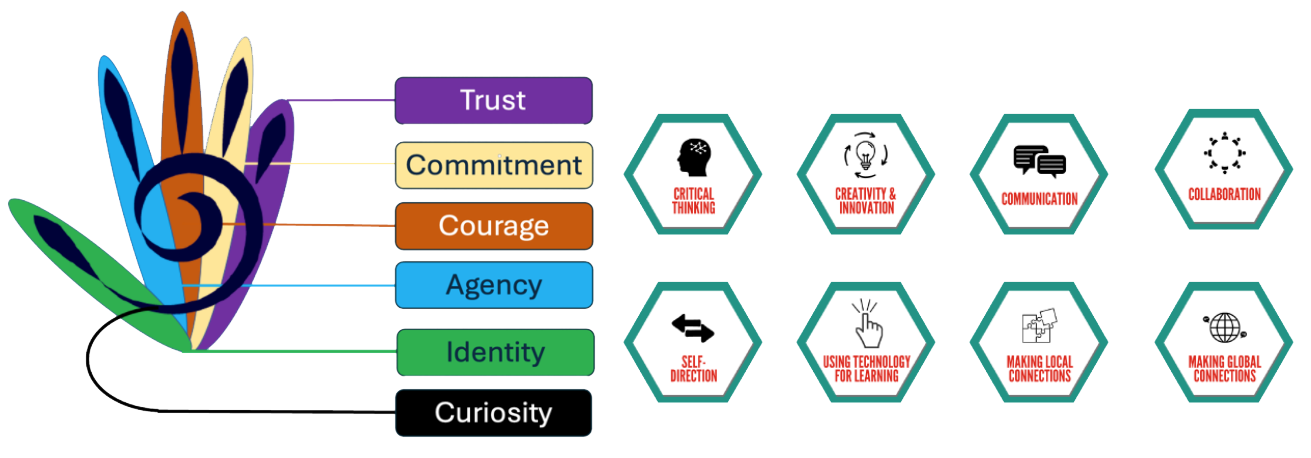
Asking real questions. Trying things. Discovering what you're good at in community.
Showing up fully. Staying with what matters. You model persistence — your children watch.
You hold the long arc. When you say "I see this in you," that validation is irreplaceable.
Where you come from is not background — it is foundation. The tree grows from these roots.
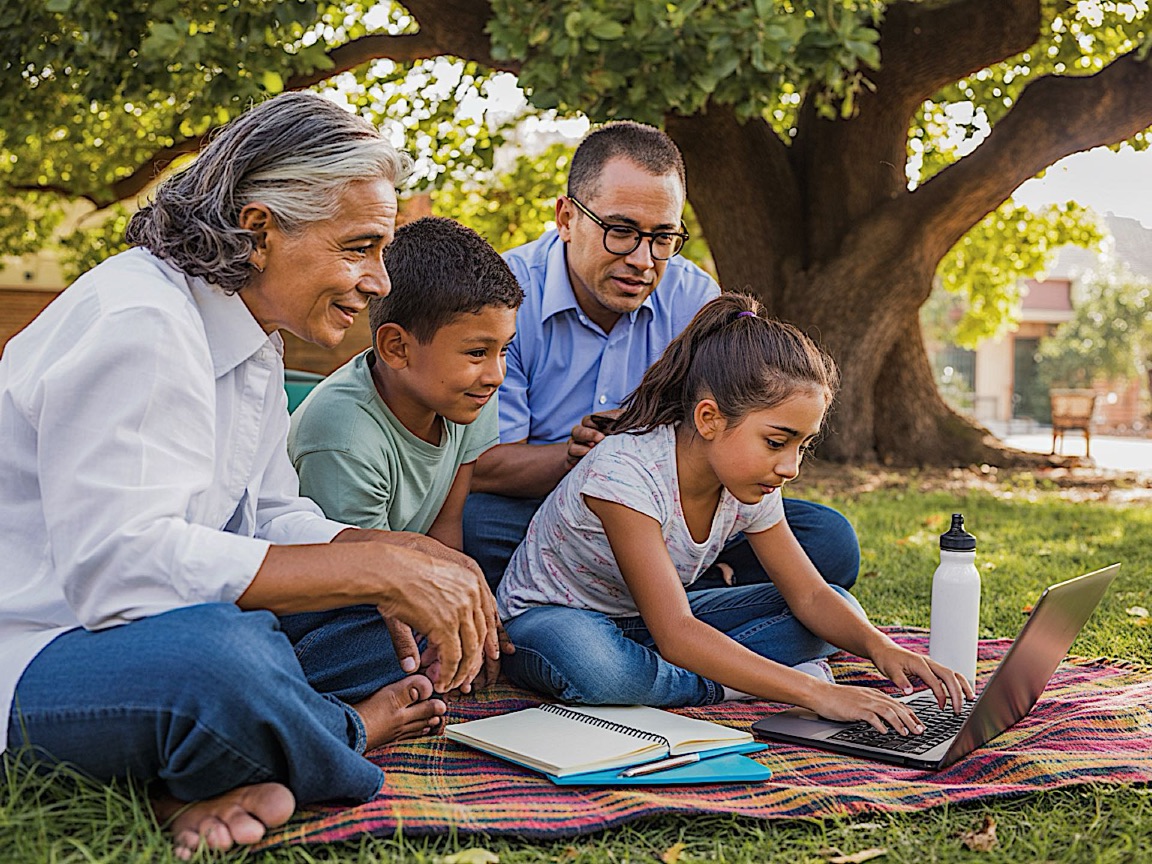



New Mexico families, learning together.
A placemat.
Two sides. One conversation.
The ASCEND placemat is a physical tool designed for the kitchen table — no internet, no account, no barrier. Two sides, each one a map of what's real in your family's life. You place a token. Someone watches. Something gets named that didn't have a name before.
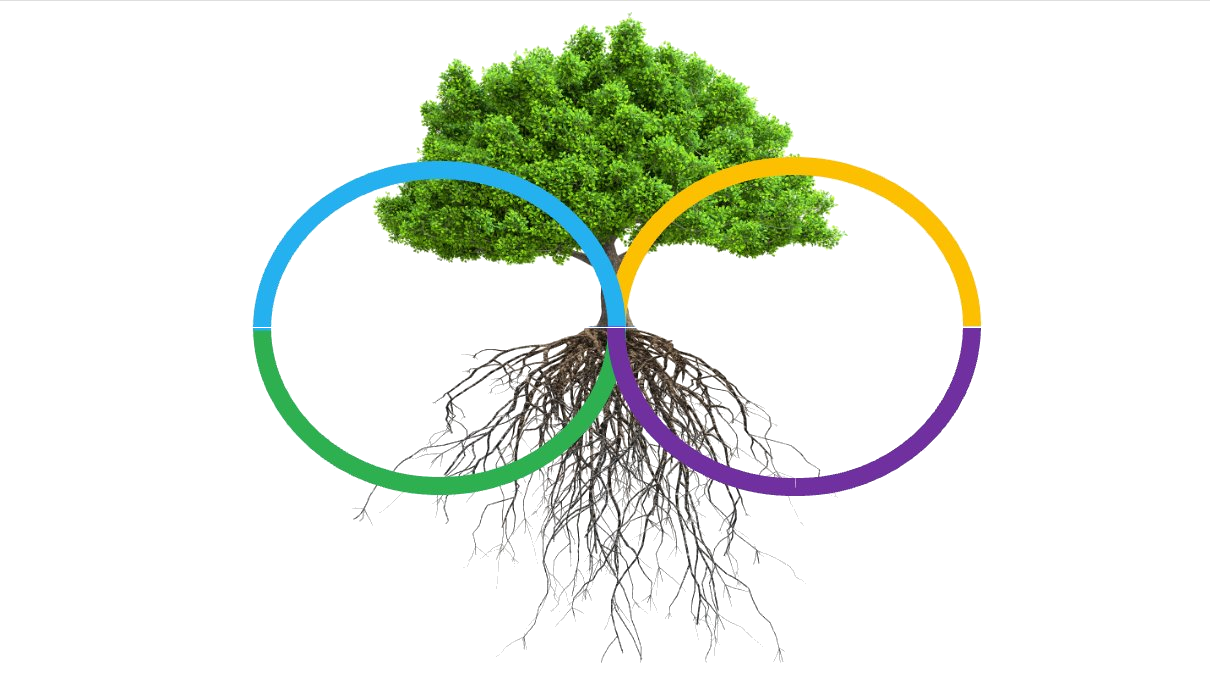
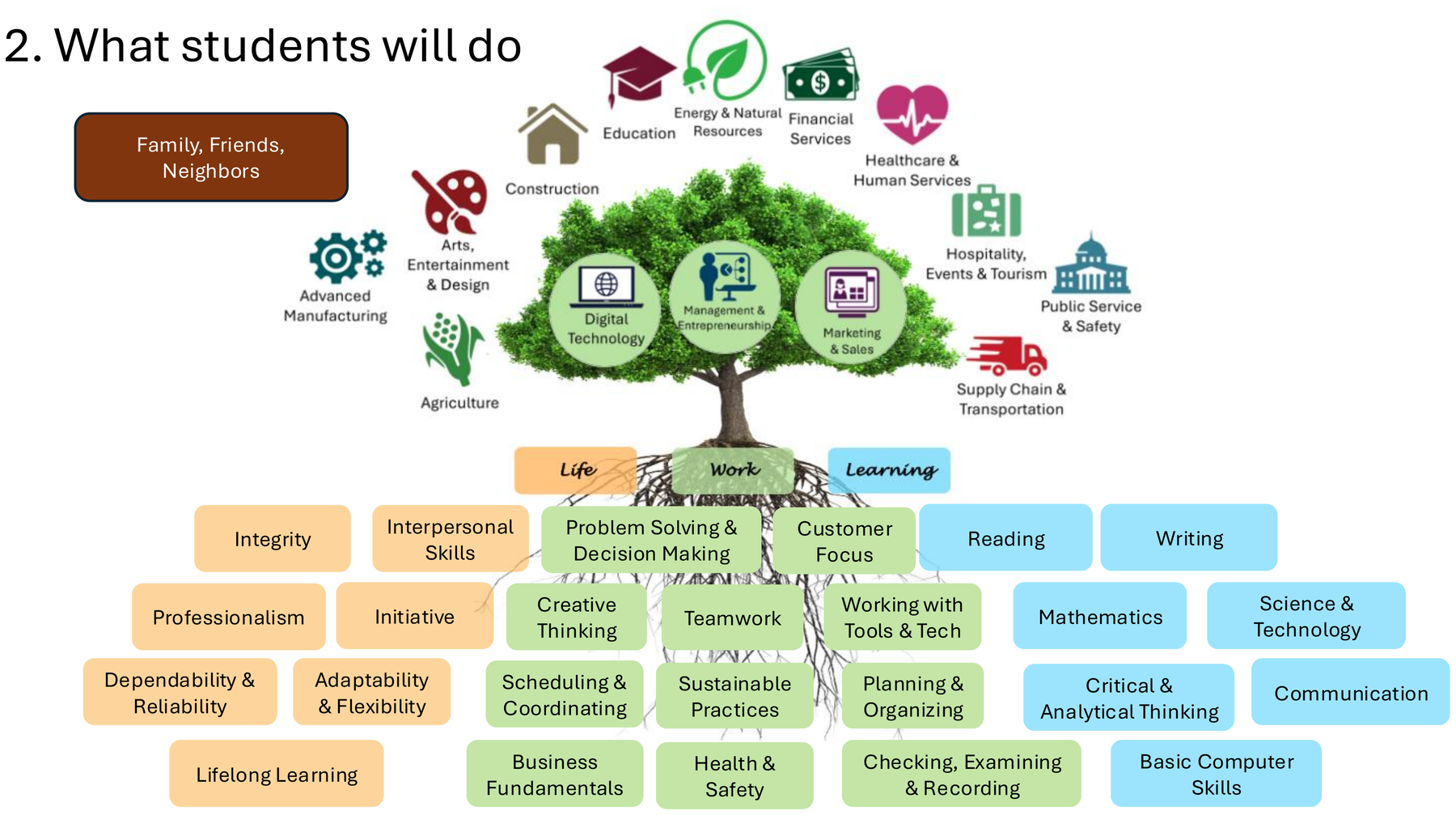
Roots show where your skills come from — Life, Work, Learning. The trunk holds your through-line. The canopy shows where those roots lead across careers and community. And in the branches: a nest holding the three skills your Family, Friends & Neighbors named in you.

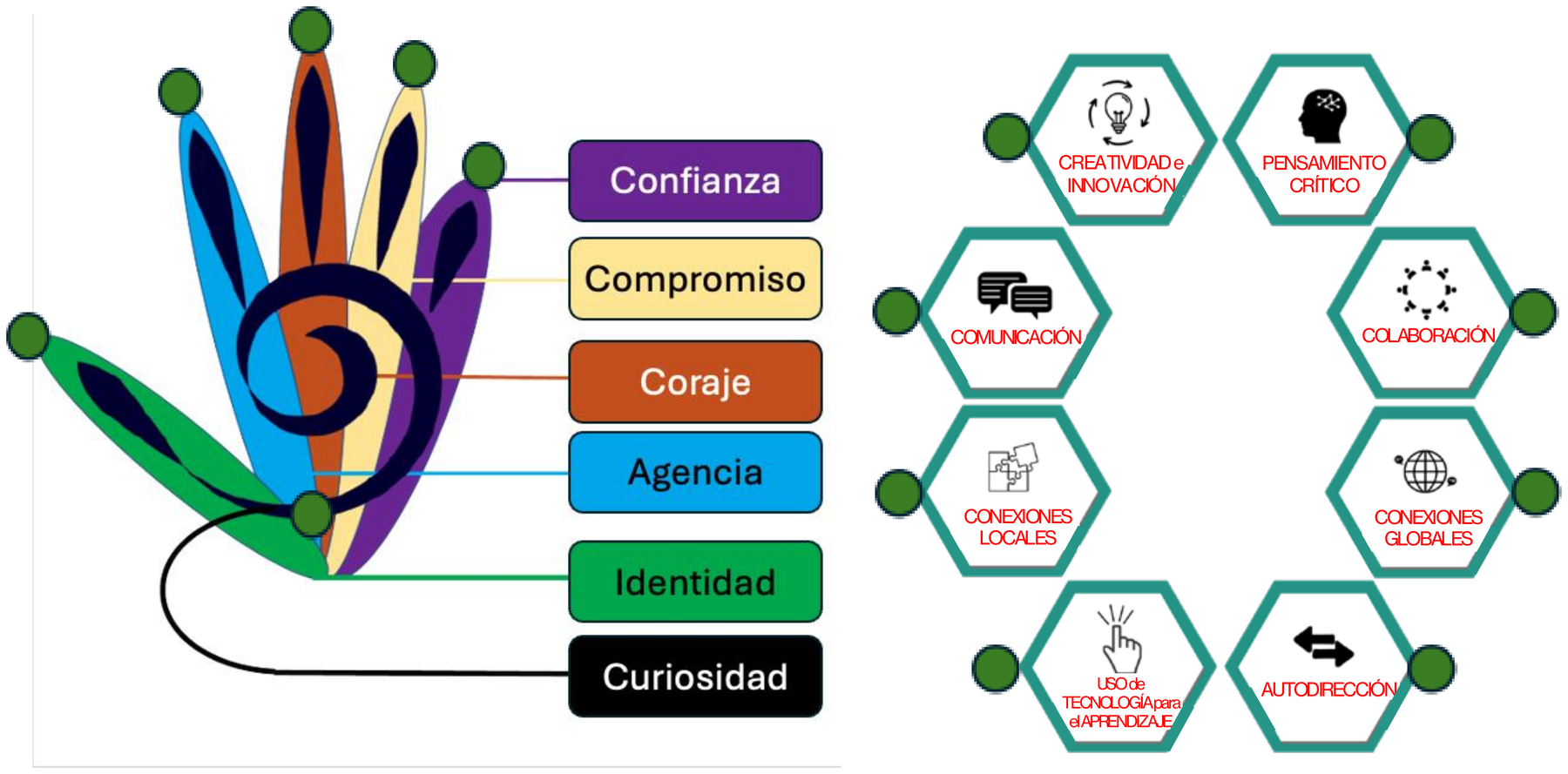
The Hand within four colored circles — one for each of the ways we're responsible to each other. This is the map of the conversation itself: which capacity is being named, which relationship principle is at work. You place a token; the witness responds.
Three questions for any conversation
Where the tree leads — in real careers.
The Tree on your placemat isn't just a metaphor. The same Life, Work, and Learning roots grow into every career cluster in New Mexico — from construction to healthcare to digital technology. When your family names a skill at the kitchen table, it connects to something real in the world outside it.
Call and response.
The whole family learns.
"When children are watching, parents persist. When elders witness, youth believe."
The research on family learning shows something simple: when you learn alongside someone you love, your relationship to the learning changes. This is not a feature of the program — it is the mechanism. ASCEND is built around it.
"I can stay calm when things go wrong, and keep the people around me steady. Here's when that happened."
"When you said Trust — I saw Courage even more. That's what held us together. Can you name that as your example?"
iCAN · iSEE · The Hand of Learning · Together We Learn
Together We Learn builds
the vocabulary to name it.
At the center of ASCEND's Family Learning approach is Together We Learn, developed by Family Learning Company. It targets the three skills that turn reading into understanding — Morphology, Syntax, and Semantics — using texts that reflect the learner's own life and community.
Books as mirrors. iCAN as mirror. The same principle, at two scales: what you read, and what you've lived.

Built together with Family Learning Company — developers of Workforce Words vocabulary curricula for over 70 skilled trades.
Ready to begin?
200 seats across all five NM STEM Hub regions. Fully funded through the McCune Foundation. Free to join. Bring your whole family.
A penny, a printed skill sheet, and a conversation with someone in your community whose career inspires you — that's how the journey starts.
AI rewards strong foundations.
We build them.
The skills that will matter most in an AI-shaped economy are not technical. They are foundational — literacy, critical thinking, self-direction, the capacity to learn. These are Durable Life Skills. And they are built at the family level, before workers ever reach the hiring line.
It's really hard to find qualified candidates to fill our job openings.
Our safety record is good, but we don't seem to improve over time.
They interview well, get hired, and start work — but their productivity never meets expectations.